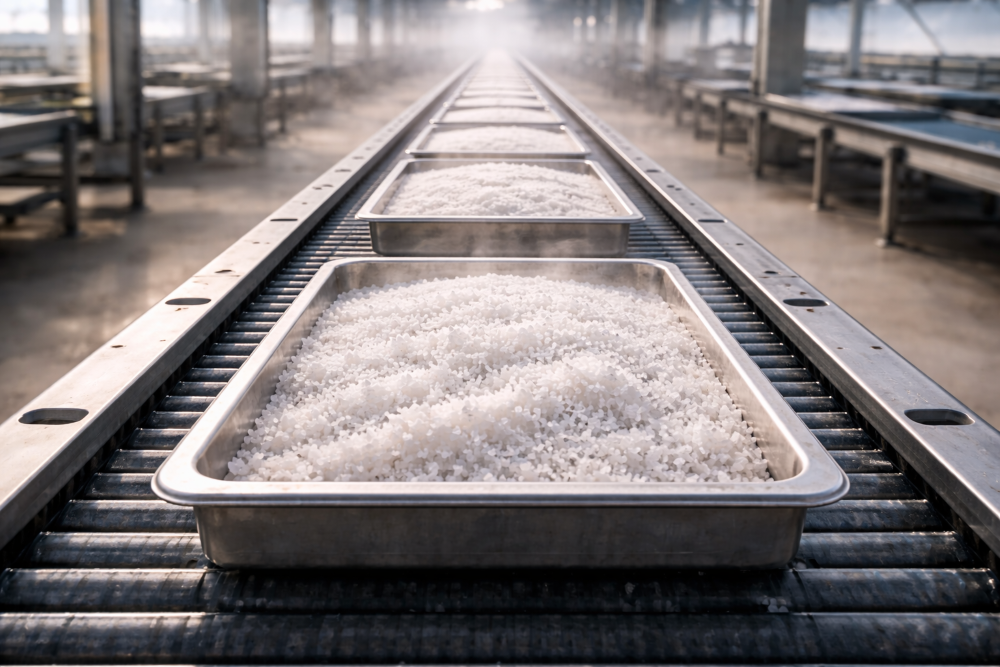
Apropos of the Problem of Salt Buildup Confronting the Sustainable Potable Water Project, How About This...
Instead of using ponds with earthen floors to act as the source of salt water within the tents, how about using large, shallow pans connected in a vertical circle, like a Ferris wheel, using a solar powered motor to power the wheel. The pans would be filled at the ground level from a spigot (not shown in graphics) when they were empty and would be removed at the front of the Ferris-wheel structure by maintenance crews from a portable structure that is basically a wheeled, staired platform (not shown in graphics), which would straddle the saltwater supply trough, when the salt-filled pans needed to be emptied of the salt that had accumulated in them. Clean pans would be installed when the salt-filled pans were removed. The exchange would be implemented by maintenance crews or by automatic disconnects onto conveyor belts, the conveyor belts being powered by solar energy just as the Ferris wheel mechanism is powered. Since our projects involve the accumulation of storable commodities (salt water, potable water, and salt), we do not have to worry about degradation of product or the sunlight not being available after sunset.
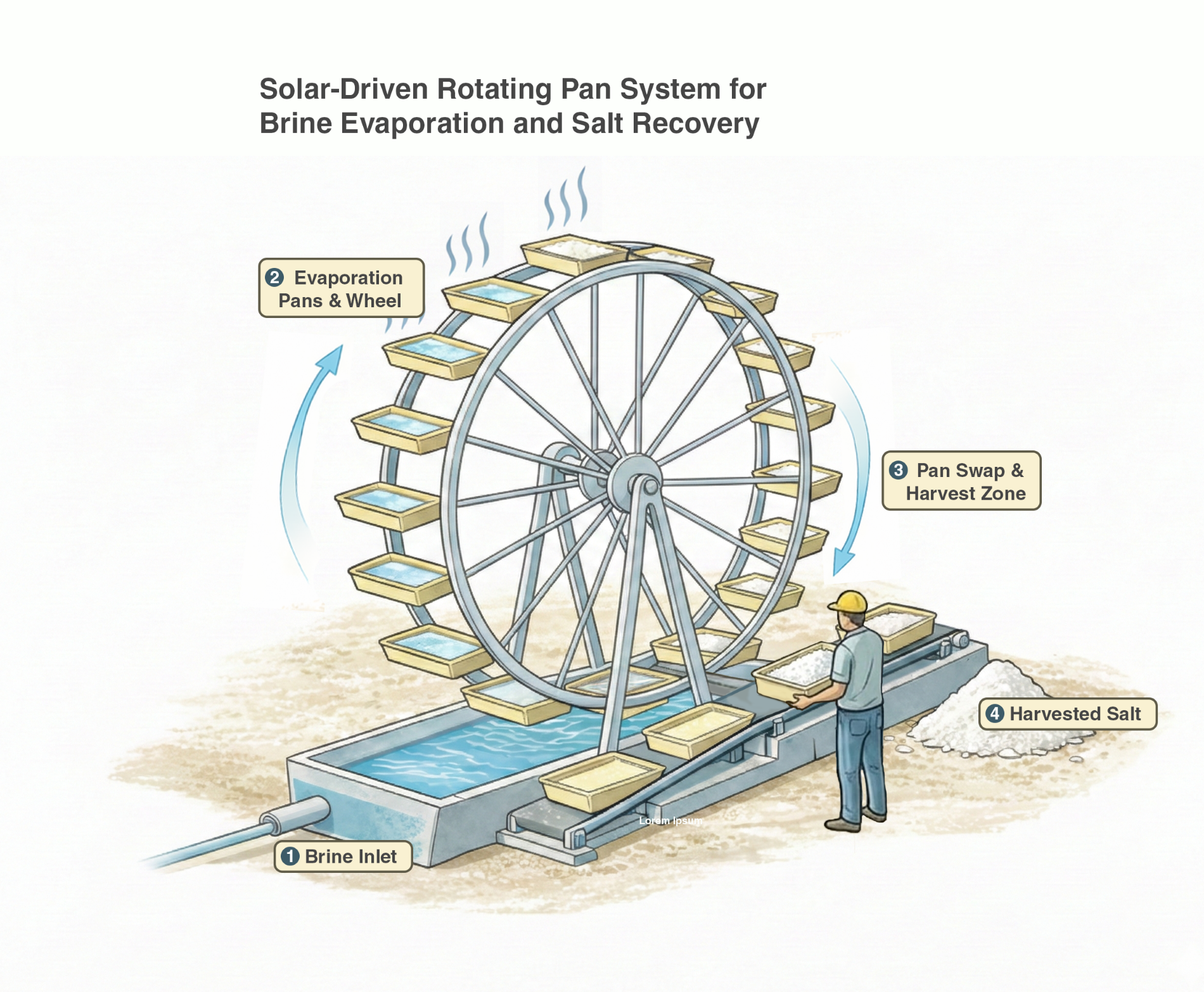
The pans of salt, if they are not completely dried out, could be inserted into other Ferris wheels outside of the potable water producing tents to complete the drying out process. The pans could be made tippable (not shown in the graphics) so that the maintainers could scrape the residue of the pans into truck beds of electric trucks or into containers on conveyor belt to be taken to areas for processing into table salt or road salts or any other types of salt that industry and communities might use now or in the future.
The optimal number of Ferris wheels and pans that can be accommodated per tent can be worked out with the height of the Ferris wheels and the size of the pans. With the height of the Ferris wheels being able to accommodate multiple layers of pans per footprints of the wheels, wouldn’t this suggestion produce more area of salt water for evaporation than the original suggested area of a manmade lake?

